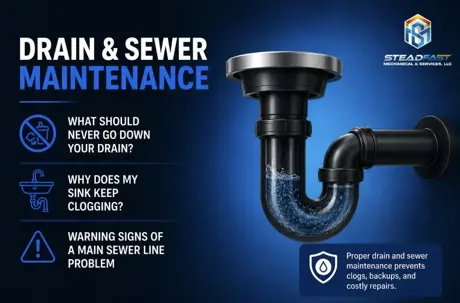
Most homeowners do not think much about their drains until water stops flowing properly. A slow-draining sink, recurring clog, or sewer backup can quickly turn a minor inconvenience into a major plumbing problem.
Your home's drain and sewer system works continuously behind the scenes, carrying wastewater safely away from sinks, showers, toilets, appliances, and fixtures. However, improper use, buildup, and aging sewer lines can create issues that affect the entire plumbing system.
Understanding what should never go down your drains, why sinks repeatedly clog, and the warning signs of a main sewer line problem can help homeowners avoid costly repairs and unexpected plumbing emergencies.
WHAT SHOULD NEVER GO DOWN YOUR DRAIN?
Many common household items can damage plumbing systems or contribute to stubborn drain clogs.
Even products marketed as disposable are often responsible for serious blockages inside residential plumbing systems.
GREASE, OIL, AND COOKING FAT
One of the most common causes of kitchen drain clogs is grease.
While grease may appear liquid when hot, it hardens as it cools inside the drain line. Over time, grease accumulates along pipe walls, collecting food particles and creating significant restrictions.
Instead of pouring grease down the drain, allow it to cool and dispose of it properly in the trash.
COFFEE GROUNDS
Coffee grounds do not dissolve in water.
When repeatedly washed down the sink, they can settle inside drain lines and combine with grease or other debris to form stubborn clogs.
FOOD SCRAPS
Even homes equipped with garbage disposals should avoid putting certain food items down the drain.
Problem materials often include:
- Pasta
- Rice
- Potato peels
- Eggshells
- Fibrous vegetables
- Fruit pits
These items can swell, stick together, or become trapped inside drain lines.
WIPES AND PAPER PRODUCTS
Despite packaging claims, many wipes do not break down like toilet paper.
Flushable wipes, paper towels, facial tissues, and cleaning wipes are common contributors to sewer backups and clogged drain lines.
HYGIENE PRODUCTS
Cotton swabs, dental floss, feminine hygiene products, and similar materials should never be flushed or washed down drains.
These products can become entangled inside pipes and contribute to larger blockages.
CHEMICAL DRAIN CLEANERS
Many homeowners reach for chemical drain cleaners when a clog develops.
While these products may provide temporary relief, they can damage pipes, create safety hazards, and make future repairs more difficult.
Professional drain cleaning is often a safer and more effective solution.
WHY DOES MY SINK KEEP CLOGGING?
Occasional drain clogs happen in nearly every home.
However, recurring clogs usually indicate an underlying issue that requires attention.
ACCUMULATED DEBRIS
Over time, soap residue, grease, food particles, hair, and other materials can build up inside drain lines.
Even when water continues flowing, these restrictions gradually narrow the pipe and increase the likelihood of future clogs.
PARTIAL BLOCKAGES
Many homeowners assume a drain is clear once water begins flowing again.
In reality, a partial blockage may remain inside the pipe, continuing to collect debris until another clog develops.
This is one reason some drains seem to clog repeatedly despite multiple attempts to clear them.
GARBAGE DISPOSAL ISSUES
Improper use of a garbage disposal can contribute to recurring sink problems.
Certain materials are difficult for disposals to process and may accumulate within drain lines even when the disposal appears to be functioning normally.
VENTING PROBLEMS
Drain systems rely on proper venting to allow wastewater to flow efficiently.
Blocked or damaged plumbing vents can sometimes contribute to slow drainage and recurring clog issues.
MAIN SEWER LINE RESTRICTIONS
If multiple drains throughout the home are experiencing problems simultaneously, the issue may extend beyond a single sink and involve the main sewer line.
WARNING SIGNS OF A MAIN SEWER LINE PROBLEM
The main sewer line connects your home's plumbing system to the municipal sewer system or septic system.
When problems develop within this line, symptoms often appear throughout the house rather than at a single fixture.
Recognizing the warning signs early can help prevent extensive property damage and expensive repairs.
MULTIPLE DRAINS BACKING UP
One of the clearest signs of a sewer line issue is when multiple drains experience problems at the same time.
For example, a sink, shower, and toilet may all begin draining slowly or backing up simultaneously.
GURGLING SOUNDS
Unusual gurgling noises coming from drains or toilets may indicate air trapped within the plumbing system due to a developing sewer blockage.
These sounds often occur when water is used elsewhere in the home.
TOILET WATER LEVEL CHANGES
A toilet that bubbles, fluctuates in water level, or behaves unpredictably may be signaling a sewer line issue.
Because toilets are directly connected to the sewer system, they often provide early warning signs when problems develop.
WATER BACKING UP INTO LOWER FIXTURES
Water appearing in tubs, showers, floor drains, or lower-level fixtures after flushing a toilet or using another drain is a strong indicator of a sewer line obstruction.
FOUL ODORS
Sewer odors inside or around the home should never be ignored.
Persistent smells may indicate a blockage, damaged pipe, venting issue, or sewer line failure.
FREQUENT CLOGS THROUGHOUT THE HOME
If multiple fixtures experience recurring clogs despite previous cleaning attempts, the main sewer line may require inspection and cleaning.
WHAT CAUSES MAIN SEWER LINE PROBLEMS?
Several factors can contribute to sewer line failures.
TREE ROOT INTRUSION
Tree roots naturally seek moisture and can enter sewer pipes through small cracks, joints, or openings.
Once inside, roots continue growing and can create significant blockages.
GREASE AND DEBRIS ACCUMULATION
Years of grease, wipes, paper products, and other materials can gradually restrict sewer flow.
AGING PIPES
Older sewer systems may deteriorate over time due to corrosion, shifting soil, or general wear.
PIPE DAMAGE
Ground movement, construction activity, and settling can cause sewer pipes to crack, separate, or collapse.
HOW PROFESSIONAL DRAIN AND SEWER INSPECTIONS HELP
Modern plumbing technology allows professionals to inspect drain and sewer lines without unnecessary excavation.
Video camera inspections can identify:
- Root intrusion
- Pipe damage
- Grease buildup
- Blockages
- Offsets and separations
- Collapsed sections
This allows homeowners to receive accurate diagnoses and targeted repair recommendations.
PROTECTING YOUR DRAIN AND SEWER SYSTEM
The best way to avoid major drain and sewer problems is through preventative maintenance and early intervention.
Avoiding harmful materials, addressing slow drains promptly, and scheduling professional inspections when warning signs appear can help prevent larger issues from developing.
For homeowners in Charlotte, Fort Mill, Indian Land, Ballantyne, Waxhaw, Weddington, and surrounding communities, protecting your drain and sewer system is an important part of maintaining a healthy plumbing system.
If you've noticed recurring clogs, slow drains, sewer odors, or multiple fixtures experiencing drainage problems, a professional evaluation can help identify the source of the issue before it becomes a costly emergency.
A properly maintained drain and sewer system helps protect your home, improve plumbing performance, and provide peace of mind for years to come.