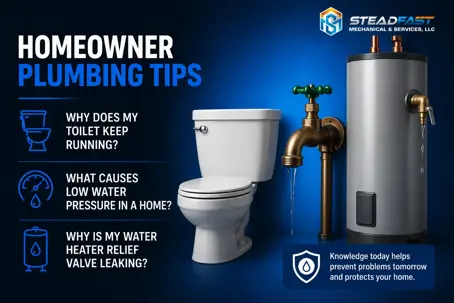
Most homeowners expect their plumbing system to work reliably every day without much thought. When something changes, whether it's a toilet that won't stop running, weak water pressure, or water dripping from a water heater, it can quickly become frustrating and concerning.
The good news is that many plumbing problems provide warning signs before they develop into larger repairs. Understanding what causes these common issues can help homeowners identify potential problems early and make informed decisions about maintenance and repairs.
Let's take a closer look at three of the most common plumbing concerns homeowners experience.
WHY DOES MY TOILET KEEP RUNNING?
A running toilet is one of the most common plumbing complaints in residential homes.
While it may seem like a minor annoyance, a toilet that runs continuously can waste hundreds of gallons of water each day and significantly increase utility bills.
Fortunately, the cause is often located inside the toilet tank.
WORN FLAPPER VALVE
The flapper is responsible for sealing water inside the tank after a flush.
Over time, the rubber can deteriorate, warp, or become damaged, allowing water to continuously leak into the bowl. As the water level drops, the fill valve activates repeatedly, creating the constant running sound homeowners often hear.
IMPROPER FLOAT ADJUSTMENT
The float controls the water level inside the tank.
If the float is set too high, water may continuously flow into the overflow tube, causing the toilet to run without stopping.
FAULTY FILL VALVE
The fill valve controls the tank's refill cycle after flushing.
As fill valves age, they can stick, wear out, or fail to shut off properly, leading to continuous water flow.
MINERAL BUILDUP
Homes with hard water can experience mineral accumulation inside tank components.
Over time, these deposits may interfere with moving parts and prevent proper operation.
WHY SHOULD A RUNNING TOILET BE ADDRESSED QUICKLY?
Many homeowners postpone repairs because the toilet still appears to function normally.
However, continuous water loss can result in:
- Higher water bills
- Increased water waste
- Premature fixture wear
- Additional strain on plumbing components
Addressing the issue early is typically far less expensive than allowing the problem to continue.
WHAT CAUSES LOW WATER PRESSURE IN A HOME?
Low water pressure can make everyday activities frustrating.
Whether it's a weak shower, slow-filling washing machine, or poor faucet performance, pressure issues often indicate an underlying plumbing concern that deserves attention.
CLOGGED AERATORS OR SHOWER HEADS
Mineral buildup is a common cause of reduced water flow.
Over time, calcium, sediment, and other deposits can accumulate inside faucet aerators and shower heads, restricting water flow and reducing pressure.
PRESSURE REDUCING VALVE (PRV) ISSUES
Homes equipped with a Pressure Reducing Valve rely on the device to regulate incoming water pressure.
As a PRV ages, it may begin malfunctioning and cause pressure fluctuations or consistently low pressure throughout the home.
WATER FILTRATION SYSTEM RESTRICTIONS
Filtration systems are designed to protect water quality, but clogged cartridges or overdue maintenance can restrict water flow.
If pressure has gradually declined over time, the filtration system may require service.
LEAKS IN THE PLUMBING SYSTEM
Hidden leaks can reduce available water pressure while also increasing water usage.
Even small leaks may affect system performance if left unresolved.
MUNICIPAL WATER SUPPLY ISSUES
In some cases, pressure changes may originate outside the home.
Water main repairs, municipal maintenance, or supply system issues can temporarily affect residential water pressure.
WHEN IS LOW WATER PRESSURE A SERIOUS PROBLEM?
A single faucet with reduced flow often points to a localized issue.
However, when pressure declines throughout the entire home, professional evaluation is recommended.
Whole-home pressure problems may indicate:
- PRV failure
- Main water line restrictions
- Filtration system issues
- Hidden leaks
- Aging plumbing infrastructure
Identifying the source early can help prevent larger repairs and restore proper performance.
WHY IS MY WATER HEATER RELIEF VALVE LEAKING?
Few plumbing situations concern homeowners more than finding water around a water heater.
One common source is the Temperature and Pressure Relief Valve, often called the T&P valve.
This important safety device is designed to protect the water heater from excessive pressure and temperature conditions.
WHAT DOES THE RELIEF VALVE DO?
The relief valve automatically opens when pressure or temperature inside the water heater exceeds safe operating limits.
This helps prevent dangerous pressure buildup within the tank.
Occasional discharge can occur under certain conditions, but persistent dripping should always be investigated.
EXCESSIVE WATER PRESSURE
High water pressure is one of the most common causes of relief valve discharge.
When pressure throughout the home's plumbing system becomes excessive, the valve may open to relieve the buildup.
THERMAL EXPANSION
As water heats, it expands.
In closed plumbing systems, this expansion can create pressure increases inside the water heater.
Expansion tanks are often installed to help manage these pressure changes and protect the system.
FAULTY RELIEF VALVE
Like any plumbing component, relief valves can wear out over time.
An aging valve may begin leaking even when system pressure remains within normal limits.
WATER HEATER ISSUES
Internal water heater problems, thermostat failures, or overheating conditions can also trigger relief valve discharge.
These situations should be evaluated promptly to ensure safe operation.
WHEN SHOULD A LEAKING RELIEF VALVE BE INSPECTED?
Any persistent dripping from a water heater relief valve deserves professional attention.
While the issue may be minor, it can also indicate underlying pressure concerns or equipment problems that could worsen if ignored.
Early diagnosis often prevents more significant repairs and helps ensure the water heater continues operating safely.
PROTECTING YOUR HOME'S PLUMBING SYSTEM
Many plumbing problems begin with small warning signs that homeowners overlook.
A running toilet, declining water pressure, or a leaking water heater relief valve may seem minor initially, but each can indicate larger issues developing within the plumbing system.
Routine maintenance, periodic inspections, and early attention to warning signs can help prevent costly repairs while extending the life of plumbing fixtures and equipment.
For homeowners in Charlotte, Fort Mill, Indian Land, Ballantyne, Waxhaw, Weddington, and surrounding communities, understanding these common plumbing issues is an important part of protecting your home.
If you've noticed a toilet that won't stop running, reduced water pressure, or water leaking from your water heater, a professional inspection can help identify the cause and provide the appropriate solution before more serious problems develop.
A well-maintained plumbing system delivers better performance, greater efficiency, and peace of mind throughout the year.