Many homeowners assume that if water looks clear, it must be clean. While appearance can provide some clues about water quality, many common water issues are not immediately visible.
Sediment, minerals, chlorine, hardness, and other contaminants can affect water quality, plumbing performance, appliance lifespan, and overall comfort throughout the home. Whether your property is served by a private well or municipal water supply, understanding how filtration systems work and recognizing signs of declining performance can help protect both your plumbing system and your family's water quality.
From sediment buildup to filtration maintenance, homeowners often have questions about what is normal and what may indicate a problem.
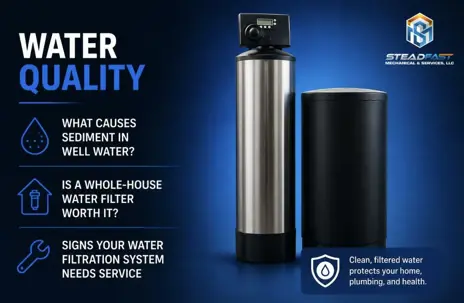
WHAT CAUSES SEDIMENT IN WELL WATER?
Sediment is one of the most common concerns for homeowners who rely on private wells.
Sediment can include sand, silt, dirt, rust particles, mineral deposits, and other naturally occurring materials that enter the water supply. While some sediment levels are normal, excessive sediment can create problems throughout the home's plumbing system.
Several factors can contribute to sediment in well water.
NATURAL SOIL AND GEOLOGICAL CONDITIONS
Groundwater moves through layers of soil, sand, rock, and sediment before reaching the well.
Depending on local geological conditions, small particles may enter the water supply and travel into the home.
WELL AGE AND CONDITION
As wells age, screens, casings, and other components may deteriorate.
Damaged or aging well components can allow increased sediment intrusion into the system.
PUMP ACTIVITY
Changes in pumping volume or groundwater conditions can occasionally stir sediment within the well, causing increased particles to enter the water supply.
MINERAL CONTENT
Many wells contain naturally occurring minerals such as iron, manganese, calcium, and magnesium.
These minerals can leave visible residue, staining, or deposits throughout the plumbing system.
WHAT PROBLEMS CAN SEDIMENT CAUSE?
Even small amounts of sediment can gradually create plumbing issues over time.
Common problems include:
- Reduced water pressure
- Clogged faucet aerators
- Restricted shower heads
- Premature fixture wear
- Water heater sediment buildup
- Appliance performance issues
- Reduced filtration system efficiency
Sediment can also accumulate inside water heaters, causing decreased efficiency, unusual noises, and shortened equipment lifespan.
For this reason, sediment filtration is often one of the first recommendations for homeowners experiencing water quality concerns.
IS A WHOLE-HOUSE WATER FILTER WORTH IT?
Many homeowners wonder whether a whole-house filtration system is truly necessary.
The answer depends largely on water quality, household goals, and the specific issues present in the water supply.
Unlike point-of-use filters that only treat water at a single faucet, a whole-house filtration system treats water as it enters the home.
This means every fixture, shower, appliance, and plumbing component benefits from filtration.
BENEFITS OF WHOLE-HOUSE FILTRATION
A properly selected filtration system may help:
- Reduce sediment
- Improve water clarity
- Minimize odors
- Reduce chlorine taste and smell
- Protect plumbing fixtures
- Extend appliance lifespan
- Improve overall water quality
Many homeowners notice improvements not only in drinking water but also in showering, laundry, dishwashing, and general household use.
PROTECTING PLUMBING EQUIPMENT
One of the most overlooked benefits of filtration is equipment protection.
Sediment and contaminants can gradually damage water heaters, fixtures, valves, washing machines, dishwashers, and other plumbing components.
Filtration helps reduce unnecessary wear and can contribute to longer equipment life.
CUSTOMIZED WATER TREATMENT
No two homes have identical water quality.
The best filtration solution depends on the specific conditions present in the water supply. Professional water testing can help determine which treatment options are most appropriate for a particular home.
SIGNS YOUR WATER FILTRATION SYSTEM NEEDS SERVICE
Like any plumbing equipment, filtration systems require periodic maintenance.
Ignoring routine maintenance can reduce performance and limit the effectiveness of the system.
Several warning signs may indicate that service is needed.
REDUCED WATER PRESSURE
One of the most common indicators of a clogged filter is a noticeable drop in water pressure.
As sediment accumulates within filter cartridges or media, water flow becomes increasingly restricted.
CHANGES IN WATER TASTE OR ODOR
If water begins developing unusual tastes or odors, filtration performance may be declining.
This often indicates that filter media has reached the end of its service life and requires replacement.
VISIBLE SEDIMENT RETURNS
If sediment begins appearing in sinks, tubs, or fixtures after filtration has been installed, the system may need maintenance or inspection.
FREQUENT FILTER CHANGES
Some homes with significant sediment loads may require more frequent filter replacement than originally anticipated.
If filter cartridges are clogging quickly, additional treatment solutions may be worth evaluating.
AGING EQUIPMENT
Even well-maintained filtration systems eventually require service, upgrades, or replacement components.
Routine inspections help identify concerns before system performance suffers.
HOW OFTEN SHOULD A WATER FILTRATION SYSTEM BE SERVICED?
Service intervals vary depending on the type of filtration system, water conditions, and household usage.
Some sediment filters may require replacement every few months, while other systems can operate for much longer between service visits.
Regular inspections help ensure the system continues operating as intended and allows homeowners to address maintenance needs before performance declines.
Following manufacturer recommendations and professional service schedules is one of the best ways to maximize filtration effectiveness.
IMPROVING WATER QUALITY THROUGH PROPER FILTRATION
Clean water does more than improve taste and appearance. Proper filtration can help protect plumbing systems, improve appliance performance, reduce maintenance concerns, and enhance overall household comfort.
For homeowners in Charlotte, Fort Mill, Indian Land, Ballantyne, Waxhaw, Weddington, and surrounding communities, understanding water quality and filtration options can help prevent costly plumbing issues while improving everyday water use.
If you've noticed sediment, changes in water quality, declining water pressure, or concerns about your filtration system's performance, a professional evaluation can help identify the source of the problem and determine the most effective treatment solution.
A properly maintained filtration system helps provide cleaner water while protecting the plumbing systems homeowners depend on every day.