Hot water is one of those household comforts most homeowners rarely think about until it suddenly disappears. From morning showers and dishwashing to laundry and everyday cleaning, your water heater works behind the scenes every day to provide the hot water your family depends on.
Like any major appliance, however, water heaters have a limited lifespan. As they age, they often provide warning signs before failure occurs. Understanding how long a water heater should last, recognizing signs that replacement may be necessary, and knowing what unusual noises can mean can help homeowners avoid unexpected breakdowns and costly water damage.
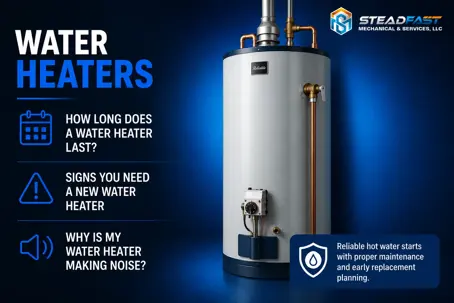
HOW LONG DOES A WATER HEATER LAST?
One of the most common questions homeowners ask is how long they should expect a water heater to last.
While every system is different, a traditional tank-style water heater typically lasts between 8 and 12 years. Some units may operate longer with proper maintenance, while others may fail sooner depending on water quality, usage patterns, and overall system conditions.
Several factors influence water heater lifespan:
- Water quality
- Sediment accumulation
- Maintenance history
- Installation quality
- Household water usage
- Water pressure conditions
Because many water heater failures occur as the unit ages, knowing the approximate age of your system can help you plan for future replacement before an emergency occurs.
HOW CAN I FIND MY WATER HEATER'S AGE?
Most water heaters include a manufacturer label containing the serial number and installation information.
In many cases, the serial number can help determine the manufacturing date of the unit. If you're unsure how old your water heater is, a plumbing professional can often identify the age during an inspection.
Once a water heater approaches ten years old, homeowners should begin monitoring for signs of deterioration more closely.
SIGNS YOU MAY NEED A NEW WATER HEATER
Water heaters rarely fail without warning.
Many systems begin showing signs of wear long before a complete breakdown occurs.
INCONSISTENT HOT WATER
If your showers are becoming shorter or water temperatures fluctuate unexpectedly, your water heater may be struggling to keep up with demand.
Internal component wear, sediment buildup, or aging heating elements can all contribute to declining performance.
RUST-COLORED WATER
Discolored hot water can indicate corrosion developing inside the tank.
While rusty water may originate from plumbing pipes in some situations, an aging water heater is often worth investigating when discoloration only appears on the hot water side.
WATER AROUND THE TANK
Any visible moisture around a water heater deserves attention.
Small leaks can worsen over time and eventually lead to significant water damage if ignored.
FREQUENT REPAIRS
As water heaters age, repair frequency often increases.
Replacing multiple components on an older unit may eventually become less cost-effective than installing a new system.
AGE OF THE UNIT
Even if a water heater appears to be operating normally, age alone can be an important factor.
Many homeowners choose to replace aging units proactively rather than risk an unexpected failure that could cause flooding or property damage.
WHY IS MY WATER HEATER MAKING NOISE?
Unusual noises are one of the most common warning signs homeowners notice.
While some operating sounds are normal, loud or persistent noises often indicate that maintenance or repairs may be needed.
SEDIMENT BUILDUP
Sediment accumulation is one of the leading causes of noisy water heaters.
Minerals naturally present in water settle at the bottom of the tank over time. As the burner heats the tank, trapped water beneath the sediment layer can create popping, rumbling, or crackling sounds.
This buildup not only creates noise but can also reduce efficiency and shorten equipment lifespan.
EXPANDING AND CONTRACTING METAL
As the tank heats and cools, metal components naturally expand and contract.
Occasional ticking or light popping sounds may result from this process and are generally considered normal.
HIGH WATER PRESSURE
Excessive water pressure can place additional stress on plumbing components and sometimes contribute to unusual operating sounds.
Pressure-related issues may affect both the water heater and the plumbing system as a whole.
HEATING ELEMENT ISSUES
In electric water heaters, failing heating elements may create unusual noises while attempting to heat water.
Professional diagnosis can help determine whether repairs are needed.
WHY SEDIMENT IS A BIGGER PROBLEM THAN MANY HOMEOWNERS REALIZE
Sediment buildup affects more than just performance.
Over time, accumulated minerals can:
- Reduce heating efficiency
- Increase energy consumption
- Shorten equipment lifespan
- Cause unusual noises
- Reduce available hot water
- Increase operating costs
Routine maintenance can help reduce sediment accumulation and improve overall performance.
SHOULD I REPAIR OR REPLACE MY WATER HEATER?
The answer depends on several factors.
In many cases, repairing a relatively new water heater makes financial sense. However, when a unit is approaching the end of its expected lifespan, replacement may provide better long-term value.
Factors often considered include:
- Age of the unit
- Cost of repairs
- Frequency of previous repairs
- Energy efficiency
- Overall condition
- Household hot water needs
A professional evaluation can help homeowners compare options and make an informed decision.
HOW TO EXTEND THE LIFE OF YOUR WATER HEATER
While no water heater lasts forever, proper maintenance can help maximize performance and longevity.
Recommended maintenance often includes:
- Annual inspections
- Sediment flushing
- Pressure testing
- Relief valve evaluation
- Expansion tank inspection
- Leak detection
Addressing small concerns early can often prevent larger and more expensive problems later.
PROTECTING YOUR HOME FROM WATER HEATER FAILURE
Water heaters are among the hardest-working appliances in any home. Because they operate daily, small issues can gradually develop without obvious warning until performance begins to decline.
Routine inspections, preventative maintenance, and early attention to warning signs can help homeowners avoid unexpected breakdowns while extending the life of their equipment.
For homeowners in Charlotte, Fort Mill, Indian Land, Ballantyne, Waxhaw, Weddington, and surrounding communities, understanding water heater lifespan and maintenance needs is an important part of protecting your home's plumbing system.
If you've noticed inconsistent hot water, unusual noises, leaks, or signs of aging, a professional inspection can help determine whether maintenance, repairs, or replacement may be the best solution.
A properly maintained water heater provides reliable comfort, improved efficiency, and peace of mind for years to come.